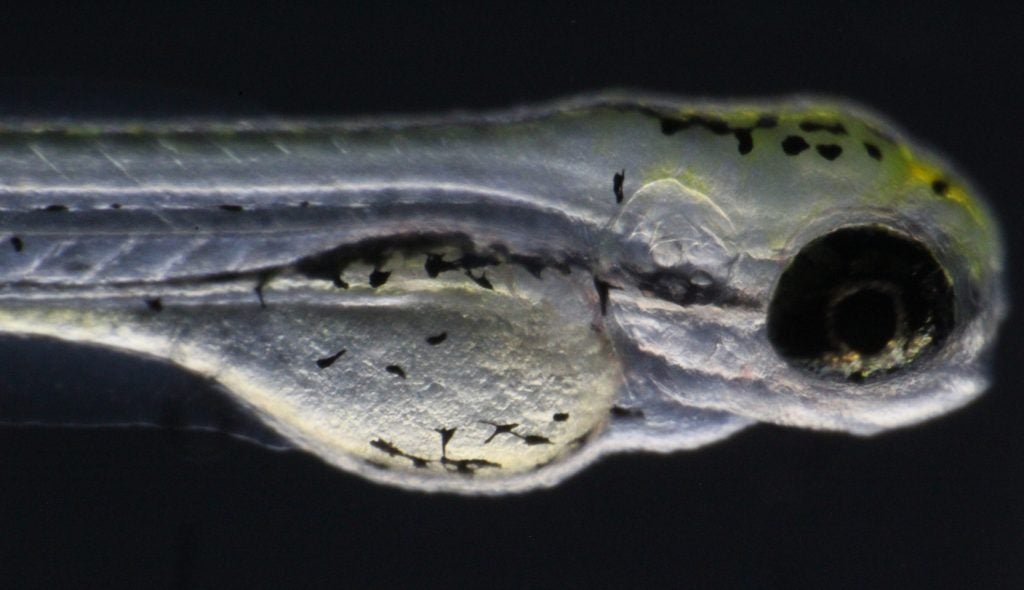
Aquatic organisms face multiple, often interacting environmental stressors, including contaminant mixtures and physical conditions such as temperature, hypoxia, and salinity. Our research takes an integrative approach, linking these complex exposures to biological responses across multiple levels of organization, from molecular mechanisms to organism-level performance, to better understand and predict ecological impacts.
Contaminant Mixtures in Delta Smelt Habitat
The Sacramento Deep-Water Shipping Channel (SDWSC) provides potential habitat for endangered Delta Smelt, but environmental contamination raises concerns about its suitability for this species. In a project led by the Segarra Lab in collaboration with the Lydy Lab and funded by the California Department of Fish and Wildlife, we investigate the occurrence, potential exposure pathways, and biological effects of hydrophobic organic contaminants (HOCs), including pesticides, PAHs, and PCBs. By combining field contaminant characterization across sediments, suspended solids, zooplankton, and fish with laboratory toxicity assessments on Delta Smelt early life stages, we aim to understand how contaminant exposure may affect fish health. This work also considers prey resources to provide a broader assessment of habitat quality and inform conservation and management decisions.
Selected Research Findings
Contaminant Exposure Pathways: Our collaborative research identified suspended solids as a potential source of contaminant exposure to pelagic fishes. Contaminant profiles in suspended solids closely resembled those measured in Wakasagi, a surrogate species for Delta Smelt, highlighting the importance of considering particle-associated contaminants when evaluating environmental exposure and potential ecological risks (La et al., 2026).
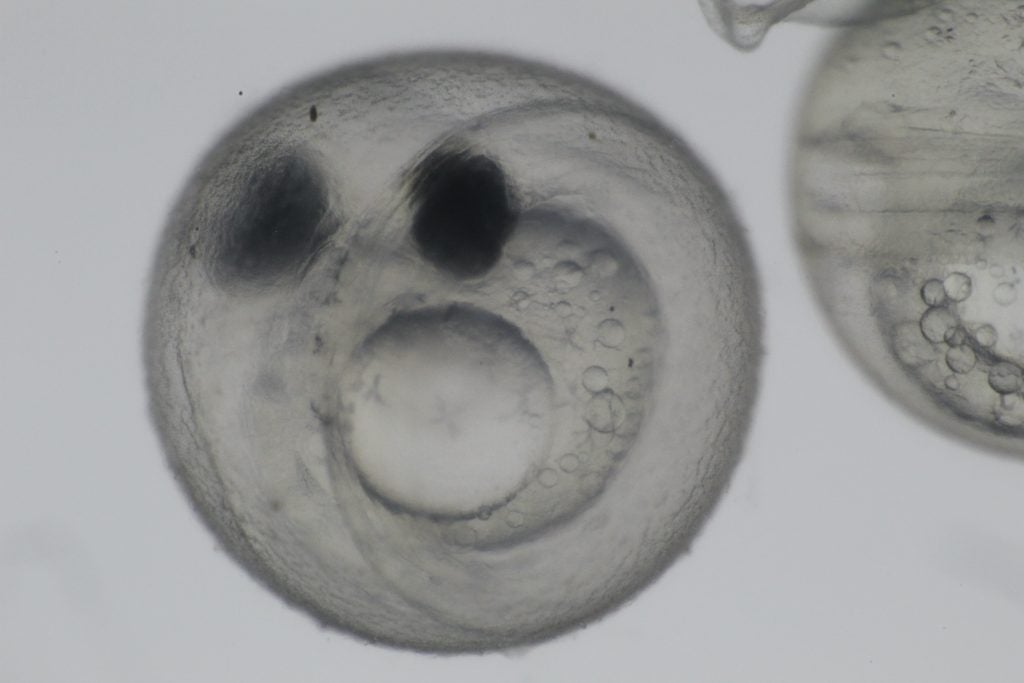
Delta Smelt — Early-Life-Stage Exposure: Using contaminant mixtures reconstructed from SDWSC field measurements, we conducted controlled laboratory exposures to investigate potential effects on Delta Smelt hatching, survival, and larval swimming behavior.

Residue-Based Toxicity Prediction
Understanding the impacts of pesticides requires looking beyond environmental concentrations to consider what fish accumulate and how they respond. Through collaborative research, we combine laboratory exposures, measurements of internal pesticide residues, and physiological and behavioral assessments to investigate relationships between exposure and biological effects. This work contributes to the development of Response Spectrum Models (RSMs), which aim to improve the prediction of pesticide impacts and support ecological risk assessment.
Selected Research Findings
Sublethal Effects of Pesticides: Our research has demonstrated that pesticide exposure can affect physiological performance and behavior in juvenile Chinook Salmon, including responses associated with environmentally relevant internal contaminant residues. Studies examining individual pesticides and mixtures highlight the importance of considering sublethal effects and interactions among contaminants (Cominassi et al., 2025; Cominassi et al., 2026).
Linking Internal Exposure to Biological Effects: Our collaborative research has established relationships between pesticide residues accumulated in fish and measurable biological responses. These findings contribute to the development of residue-based models for evaluating potential pesticide impacts under environmentally relevant exposure conditions (Knaub et al., 2025; Huff Hartz et al., 2025).


Chinook Salmon behavior is also recorded and analyzed. Here you can see our EthoVision system at work, tracking the movements of each individual fish.

Pesticide Accumulation in the Field: Our collaborative research demonstrated that juvenile Chinook Salmon accumulate pesticides during outmigration through the Delta, with exposure influenced by migration history and environmental conditions. Complementary caged-fish studies provided further evidence of pesticide uptake under field conditions (Miraly et al., 2026).
From Laboratory to Field: Building on laboratory research, we investigate pesticide accumulation in juvenile Chinook Salmon under field conditions in the Sacramento–San Joaquin Delta. Through collaborative studies involving migrating and caged fish, we aim to better understand patterns of environmental exposure and how internal pesticide residues vary across field conditions.


Air Pollutant Mixtures & Developmental Toxicity
As part of a collaborative EPA STAR-funded project, the Segarra Lab uses zebrafish embryos to investigate the developmental toxicity of individual air pollutants and complex mixtures. By integrating molecular, developmental, and behavioral assessments, this research examines how chemical interactions influence toxicity and how observed effects compare with predictions based on individual contaminants. Together with complementary crustacean embryo assays, these approaches aim to improve the assessment and prediction of developmental hazards associated with complex air pollutant mixtures, with implications for human health risk assessment.