Open Position
Postdoctoral Research Opportunity in Fish Physiology and Behavior
Open date: Open Immediately
Next Review Date: December 1, 2026
Final Date: March 1, 2027
The anticipated start date is January 2027, with flexibility depending on candidate availability.
Location: School of Veterinary Medicine, University of California, Davis.
Position Description:
The Segarra Lab at the University of California, Davis (UC Davis) seeks a highly motivated Postdoctoral Researcher with expertise in fish physiology and behavior to join our team. The successful candidate will join a collaborative and interdisciplinary research environment involving faculty, staff and students studying the physiological ecology of California fishes and their responses to environmental change, with the ultimate goal of improving conservation and management strategies. The initial appointment will be for one year, with the possibility of extension for a second or third year, subject to funding availability.
The primary responsibility of the Postdoctoral Researcher will be to oversee and conduct experiments investigating the effects of environmental conditions and contaminant exposure on the physiology and behavior of juvenile Chinook salmon. These projects aim to provide critical information on how environmental stressors influence fish performance during outmigration and the potential implications for salmon conservation and management.
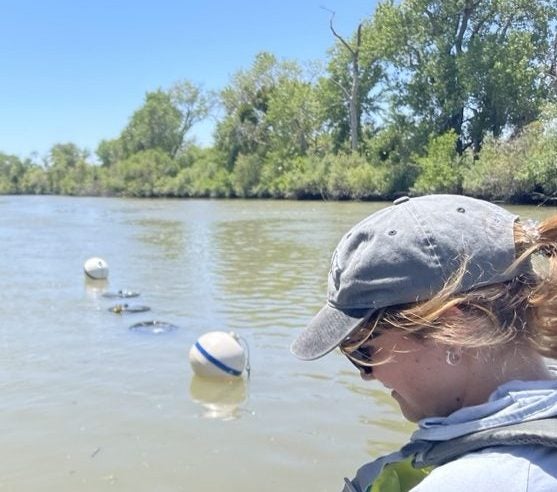
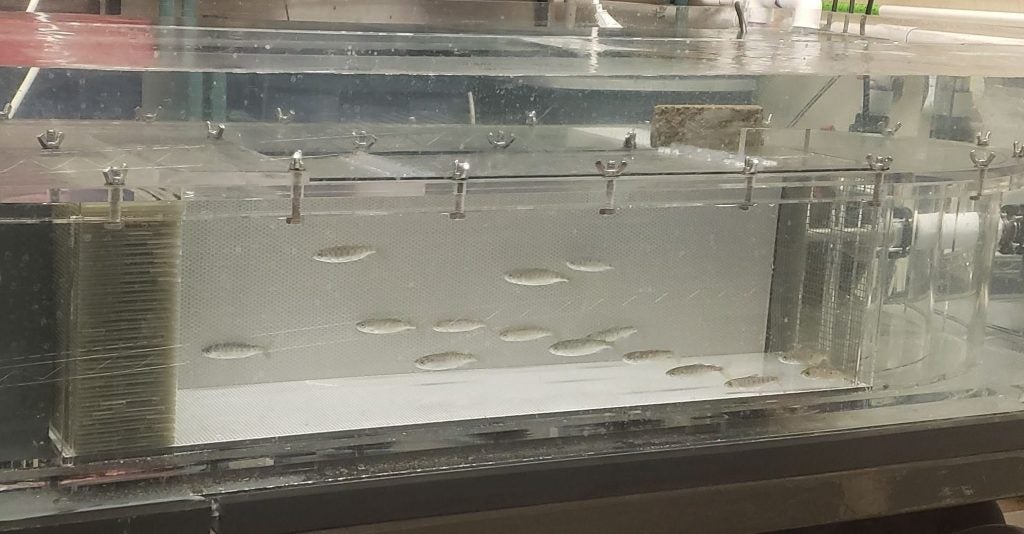
Field-based fish exposures and laboratory swimming performance assessments.
The researcher will participate in field-based exposure studies, including fish cage deployments in collaboration with the Fangue Lab at UC Davis, followed by laboratory assessments of fish physiology and behavior. Experiments may include swimming performance (Ucrit), thermal tolerance (CTmax), physiological stress indicators (e.g., cortisol and blood glucose), and behavioral assays. These assessments will be complemented by contaminant analyses of fish tissues and water samples conducted in collaboration with Southern Illinois University (SIU).
The successful candidate will play an active role throughout the research process, from experimental design and data collection to statistical analysis, interpretation, and scientific communication. The candidate will also be responsible for supervising undergraduate students and coordinating their involvement in research activities. The position offers opportunities to serve as lead author on peer-reviewed publications, present research findings at scientific conferences, and interact with academic collaborators and stakeholders involved in fisheries conservation and management.
Qualifications:
- Ph.D. in Physiology, Ecology, Animal Biology, Animal Behavior, or a closely related field.
- Demonstrated hands-on experience conducting fish physiology experiments and interpreting physiological data.
- Experience in experimental design, planning, and project coordination, including the ability to meet research objectives and deadlines.
- Strong statistical and analytical skills, including proficiency with R or comparable statistical software.
- Strong organizational, interpersonal, and problem-solving skills, with the ability to work independently and collaboratively.
Preferred Qualifications:
- Fish physiology: Experience with physiological techniques such as swimming performance (Ucrit), thermal tolerance (CTmax), and physiological stress measurements.
- Fish behavior: Experience designing behavioral experiments and using behavioral analysis software (e.g., EthoVision).
- Field research: Experience with fish handling, cage deployments, boat-based fieldwork, and small-boat operation.
- Salmonid research: Previous experience working with salmonids, particularly Chinook salmon, including fish husbandry and experimental handling.
- Scientific productivity: Strong publication record in peer-reviewed journals, demonstrating scientific independence and effective communication of research findings.
- Research leadership: Experience independently managing research activities, troubleshooting experimental challenges, and mentoring undergraduate students or research assistants.
- Environmental toxicology: Previous experience would be an asset.
Salary and Appointment
Salary and benefits will be consistent with UC Davis policies and commensurate with qualifications and experience.
Application Requirements
Interested candidates should submit:
- Curriculum Vitae (CV), including publications, presentations, and relevant laboratory and field research experience.
- Cover letter (1–2 pages) describing their research background, relevant technical expertise, professional interests, and motivation for applying.
- Contact information for three professional references familiar with the candidate research experience and qualifications.
Please email your application to asegarra@ucdavis.edu with the subject line: “Post-Doc in fish physiology”. For more information about our research, please visit https://segarralab.faculty.ucdavis.edu/science-in-action/
Position Closed
Toxicology Postdoctoral Research Position at the University of California Davis
Open date: October 30, 2023
Deadline: Applications will be considered in the order they are received. (Last review: January 1st , 2024)
Position Description:
The Segarra Lab at the Department of Anatomy, Physiology and Cell Biology, University of California, Davis (UCD) has an opportunity for a Postdoctoral Researcher interested in neurodevelopment, neurobehavior, and toxicology to join their team. Research in the lab focuses on interactive effects of contaminants as complex mixtures, as well as with multiple other environmental stressors. The Segarra lab uses the Zebrafish model and non-model species to study mechanistic, behavioral, and reproductive toxicology.
The candidate will be involved in a collaborative EPA-STAR project that aims to determine the risk of anthropogenic contaminants on human prenatal development. The primary responsibilities of the Postdoctoral Researcher will be to understand how anthropogenic factors impact Zebrafish development, behavior, morphometric characteristics, and genomics during experimental exposures.
The candidate will work under the general direction of Dr. Segarra to participate in research projects that study the molecular basis of neurodevelopmental impairment related to contaminants. The candidate is expected to be involved in the entire research process, from designing and conducting experiments on Zebrafish to statistically analyzing the data and writing peer-reviewed publications. An essential aspect of this position will be project management, coordination, and scientific communication.
The candidate will have successfully defended their Ph.D., authored high-quality publications in a related field, and demonstrated evidence of being both intellectually driven and highly cooperative in a teamwork setting.
Initial appointments will be for two years with a possibility of extension. Applications will be considered in the order they are received.
Qualifications:
- Ph.D. in Molecular Biology, Environmental Toxicology, Neurodevelopment, Animal Biology, or a closely related field.
- Zebrafish expertise, background in fish model species
- Strong skills in molecular biology
- Strong interpersonal and communication skills
- Ability to work independently and collaboratively with researchers and students from many scientific backgrounds, including agency partners and stakeholders.
- Experience designing, planning, and conducting experimental procedures, including the ability to meet project goals promptly and follow through on project deliverables,
- The ability to communicate research findings both at professional meetings and in high-quality peer-reviewed journals,
- Strong experience with data analysis
- Excellent technical, analytical, organizational, and problem-solving skills,
- Strong attention to detail, and meticulous work style, as evidenced by previous research,
- Willingness to conduct research as dictated by the life cycles of the fish being studied (this means working through holidays as needed).
The following qualifications and expertise are desired:
- Familiar with toxicological research
- Familiar with Ethovision and social behavior
- Familiar with morphometric analyses of early life stages of fish.
- Fluorescence microscopy
- Previous experience managing, mentoring or overseeing staff, graduate or undergraduate students.
- A demonstrated ability to think critically about the practical application of research outcomes.
Salary: Salary and benefits are consistent with UC Davis policy and applicant experience.
Application Requirements:
- Curriculum Vitae – inclusive of publications, awards, and both laboratory and field experience
- A cover letter discussing your key experimental qualifications, professional goals, and specific interest in this position. Please include potential faculty mentor names; and how you learned of this position.
- Research Accomplishments – 1-2 Pages
- A list of 3 references
Please E-mail your application to asegarra@ucdavis.edu, with the subject line: “Post-Doc Zebrafish Toxicology ” so that it can be easily recognized. The start date is expected to be as early as December 2023.